Analysing Craig Hanson's recommended hand release action
Craig Hanson recommends a flipping subtype of non-DH hand release action,
which he has described in a large number of his you-tube channel's videos and
where he repeats his message in a similar way each time, with only subtle
descriptive variations.
Here are two videos where he talks about his recommended hand release action.
Video 1:
Video 2:
CH very often expresses his
opinions in an exaggerated/hyperbolic manner - for example, he wrongheadedly
claims that his hand release action is used by
most modern day professional golfers and he
wrongheadedly claims that his opinions are "evidence-based". I normally use the
term "evidence-based" to describe an opinion that is scientifically-based, but
CH seems to think that his opinions are evidence-based because a subset of pro
golfers use his recommended hand release technique.
If you view his two videos, you will note that he is
describing/recommending the standard
flipping subtype of non-DH hand release action. CH did not originate this
pattern of hand release action and many other golf instructors recommend the
same pattern. Brian Manzella calls it the rotation-about-the-coupling point hand
release action. Mike Malaska recommends the same flipping subtype of non-DH hand
release action, but he accentuates an active right arm throw action where the
trail hand is actively pushing the club handle through impact. CH is vague as to
whether the trail hand should be applying a positive torque (positive push-force
against the aft side of the club handle) through impact.
CH in describing his hand release action does not want
a golfer to flip pre-impact and he wants the golfer to have forward shaft lean
at impact. However, he then wants the lead wrist to extend, and the right wrist
to fully straighten, during the early
followthrough time period. CH does not have a check point at P7.2 or P7.4 and
his first checkpoint is roughly at ~P8 -P9 when the trail arm is horizontal
relative to the ground, where he wants the back of the lead wrist to be very
extended and facing the ground and where he wants the back of the fully
straightened trail wrist to be facing partially skywards. If you look at capture
images of his recommended hand release action at the P8 - P9 time period, you
can imagine that his trail wrist has rolled over his lead wrist. However, CH
does not want the trail forearm to pronate through impact (as seen in a rolling
subtype of non-DH hand release action) and he wants a golfer to "feel" the trail
hand working under
the lead hand during impact and during the early followthrough. Mike Austin
recommended that type of trail wrist release action and it is often referred to
as a puck release type of hand release action.
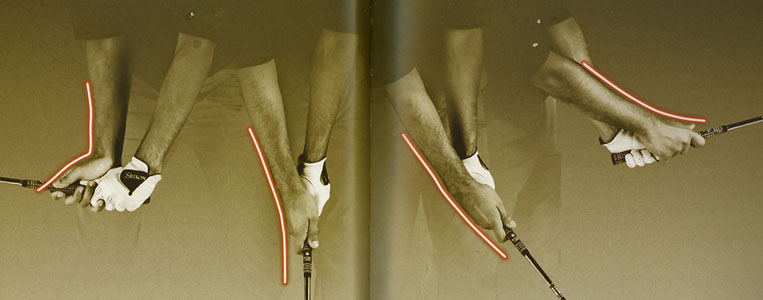
Nick Bradley used the term "puck release" in his golf
swing instructional book called "The 7 Laws of the Golf Swing" and here are
capture images from his book showing a puck release type of hand release action.
Note how the straightening
trail wrist in image 3 is working under the lead hand, which is "breaking
down"/extending. Note that at P8 (image 4) the back of the bent lead
wrist/hand is facing the ground while the trail hand is partially facing the
ball-target line and partially facing skywards.
In his description of the trail wrist motion between P6 (when the trail wrist is markedly extended) and P8 (when the trail wrist is fully straightened) CH wants the trail palm to be continuously moving parallel to the functional swingplane (and he uses a "paintbrush painting motion" analogy in his video), and he imagines that it will ensure that the clubface will remain square relative to the clubhead path during that time period. That's not possible for two reasons. First of all, the clubface has to be steadily closing relative to the clubhead path between P6.5 => P7 as a result of a mandatory PA#3 release action that happens in all pro golfers who use a weak/neutral or slightly strong lead hand grip (with the degree of clubface closing being inversely proportional to the strength of the lead hand grip). CH recommends a moderately strong lead hand grip (3-knuckle lead hand grip) for his hand release action, and that will minimize the degree of clubface closing happening during a PA#3 release action. It is also not possible to guarantee that the clubface will not close relative to the clubhead path between P7 => P8 if the lead wrist extends a lot during that time period - secondary to a counterclockwise lead wrist circumductory roll motion +/- a finite degree of lead forearm supination happening (as seen in image 4 above).
The fundamental question then becomes - does the lead wrist flipping motion that happens between P7 => P7.2 cause a significant amount of clubface-closing motion that prevents the clubface remaining square relative to the clubhead path during the immediate post-impact time period. I think not!
Consider these capture
images of a pro golfer performing CH's recommended flipping subtype of
non-DH hand release action (from the 2nd video).
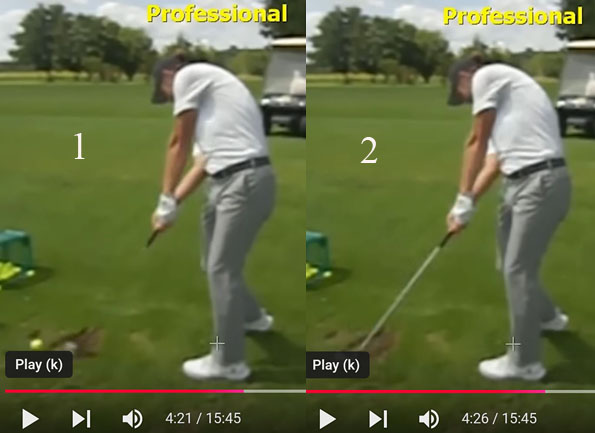
Image 1 is at impact
and image 2 is when the clubhead is approximately 6" post-impact.
Although the lead wrist
is moving towards
a greater degree of extension between P7 => P7.1, the amount is very
small and insignificant and it should not negatively affect a skilled
golfer's ability to hit the ball very straight in a consistent and
controllable manner. CH is a superb ball-striker and his flipping
subtype of non-DH hand release action can work very well in "real life".
In fact, it may be preferable to my frequently recommended DH-hand
release action in senior/inflexible golfers who cannot perform the
biomechanical movements needed to flawlessly perform a no-roll subtype
of DH-hand release action.
CH has a silly/unscientific tendency to post images of pro golfers at their ~P9+ positions in order to infer that they are using his recommended flipping subtype of non-DH hand release action.
Here are capture images
from his video - featuring Nelly Korda and Viktor Hovland.
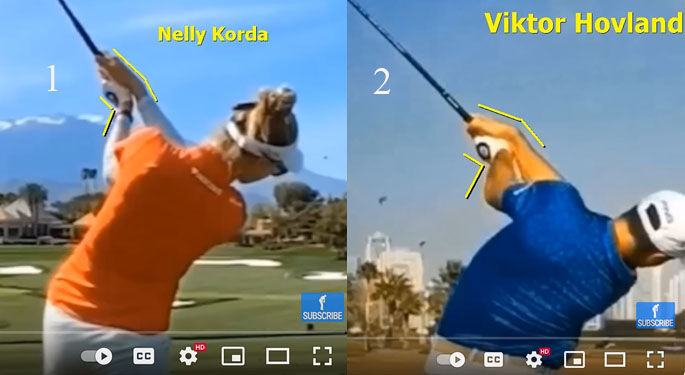
Note that they both have a markedly bent lead wrist and a fully straightened/slightly flexed trail wrist. That must happen to a finite degree between P8 => P9 in all pro golfers who get their clubshaft to be on-plane between the P8 => P9 positions. However, it tells us nothing about their pattern of hand release action that is happening during the early post-impact time period between P7 => P7.4.
Both of those pro golfers are DHers - as clearly visible in the following capture images.
Nelly Korda's
DH-hand release action.
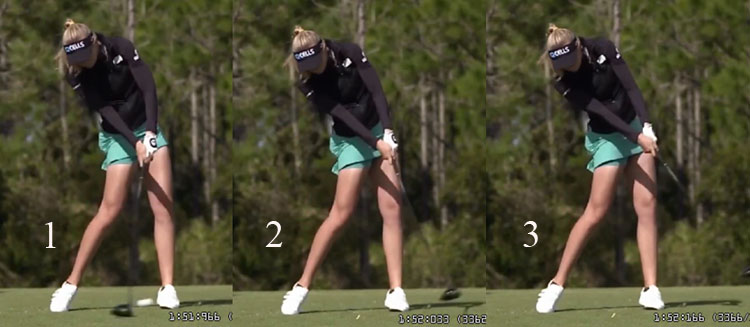
Image 1 is at P7, image 2 is at P7.2 and image 3 is at P7.4.
Note that the clubshaft does not bypass her lead arm (from an angular rotational perspective) between P7 => P7.4.
Note that her lead wrist is slightly flexed at P7, with minimal change in the degree of lead wrist extension between P7 => P7.4. Note that her trail wrist is slightly extended at P7 and note that it does not straighten to a large degree by P7.4.
Viktor
Hovland's DH-hand release action.
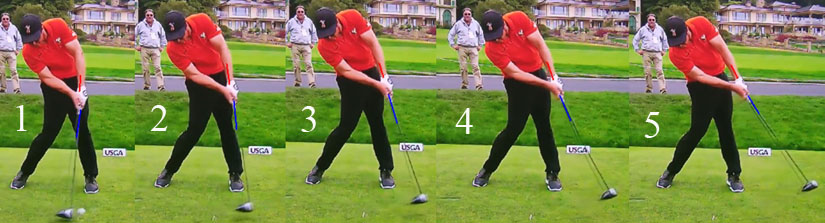
Image 1 is at P7, image 2 is at P7.1, image 3 is at P7.2, image 4 is at P7.3 and image 5 is at P7.4.
I have drawn a red line down the longitudinal axis of his lead forearm and a blue line down the longitudinal axis of his proximal clubshaft - note that those two line are straight-line-aligned at every moment between P7 => P7.4 and that there is no "break-down" of his lead wrist. Also, note that he maintains a significantly bent trail wrist all the way between P7 => P7.4. Note how efficiently he moves his trail shoulder downplane between P7 => P7.4 so that he does not "run-out-of-trail arm" and how that allows him to maintain a slightly bent trail arm and slightly extended trail wrist all the way to P7.4. Note how his clubface remains square relative to his clubhead path between P7 => P7.4 as a result of his DH-hand release action.
It takes a
lot of flexibility and athleticism to perform a DH-hand
release action very efficiently like Viktor Hovland, but it
is a viable option for young/flexible/athletic golfers who
prefer performing a DH-hand release action, rather than a
flipping subtype of non-DH hand release action, through
impact.
Jeffrey Mann.
https://newtongolfinstitute.proboards.com/thread/1150/analysing-hansons-recommended-release-action