Milo Lines video on using a baseball grip
Watch the following Milo Lines video
In this video, ML is suggesting how a baseball player can use his baseball
grip for his golf swing action.
A baseball player uses a very strong lead hand grip and if that same lead hand
grip pattern is used for a golf swing action, one needs to ensure that when the
back of the lead hand faces the ball-target line at address that the clubface
should face the target and be square. ML emphasizes that point in his video.
Where I totally disagree with Milo is his assertion that the trail hand grip
should be neutral and he thereby implies that the trail hand plays an essential
role in squaring the clubface by impact. I believe that the trail hand grip can
be be neutral (as seen in Milo Lines golf swing action) or weak (as seen in
Matthew Fitzpatrick's golf swing action) or very strong (as seen in David
Duval's golf swing action). The fact that each of these pro golfers has no
difficulty squaring the clubface by impact is related to the fact that they keep
the clubface roughly square relative to their clubhead arc throughout the entire
downswing action and the related fact that very little, if any, lead forearm
supination is required during the PA#3 release phase that usually happens
between P6.5 => P7. Because the back of their lead hand remains roughly parallel
to the functional swingplane, and also the ball-target line, between P6 => P7,
that means that their clubface will be roughly square to the clubhead path
during that time period - irrespective of their trail hand grip's orientation.
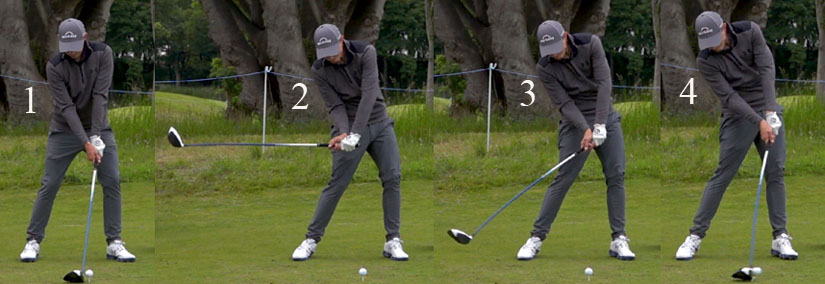
Here are capture images of Matthew Fitzpatrick's late downswing action between
P6 => P7.
Image 1 shows his very strong lead hand grip and his very weak trail hand grip at address. Note that his hands have the same alignment at impact - image 4. Note that he is releasing the club (= releasing PA#2) between P6 (image 2) and P7 (image 4), which means that his lead wrist must be moving towards ulnar deviation. However, note that there is no counterclockwise rotational motion of the back of his lead hand happening between P6 => P7 because he does not need to rotate his clubshaft about its longitudinal axis (as routinely seen in a pro golfer who uses a weak-or-neutral lead hand grip). MF is simply keeping his clubface square relative to his clubhead path between P6 => P7 and he does not have to use his trail hand to square his clubface during that time period.
Here is a video of David Duval's golf swing action.
Note that he adopts a very strong trail hand grip at address, which means that he has to have the same trail hand grip alignment at impact where the trail palm is mainly under the club handle and significantly facing skywards (in contrast to MF's trail palm which is partially facing the target and partially facing groundwards at impact).
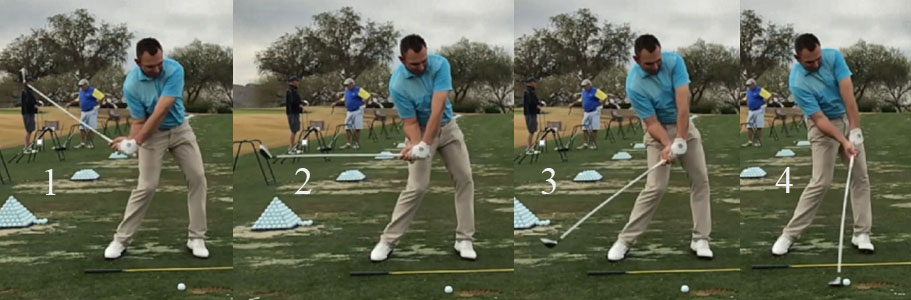
Milo Lines uses a neutral trail hand grip so his trail palm will be
mainly facing the target at impact - as seen in the following capture
images.
I strongly believe that if a golfer wants to use a baseball grip
style (= very strong lead hand grip) that it is a perfectly
acceptable choice, but I also believe that it is an optional choice
as to whether he wants to use a weak, or neutral, or strong trail
hand grip - because the trail hand is not used to square the
clubface during the later downswing.
Now, listen and watch what ML says/demonstrates between the 6:09 - 9:00 minute time point of the ML-video.
ML states that he does not want to have his trail palm facing skywards as he
approaches impact and he believes that it is necessary to use a neutral trail
hand grip so that the plane of trail wrist hinging (= planar motion of trail
wrist extension => flexion) is roughly perpendicular to the ball-target line
between P6 => P7 in order for the trail wrist to perform a needed
clubface-closing action.
I think that he is wrong and I think that it very easy to prove that he is wrong
- especially when it comes to golfers who use a very strong lead hand grip,
where the back of the lead hand remains roughly parallel to the ball-target
line, and functional swingplane, between P6 => P7. The major advantage of using
a very strong lead hand grip is that the clubface is basically near-square
relative to the clubhead path throughout the entire downswing and therefore
there is no need to roll the clubshaft counterclockwise about its longitudinal
axis during the late downswing between P6 => P7.
Look at the following video of Boo Weekley's downswing action.
Note that BW adopts a very
strong trail hand grip so that his trail palm is
under the club handle at address. Note that his
trail palm remains under
the club handle throughout his entire downswing's hand arc path, which means
that his plane of trail wrist hinging (extension => flexion) is constantly
oriented at a roughly perpendicular angle relative to his hand arc path between
P4 => P7.
Here are capture images from the video.
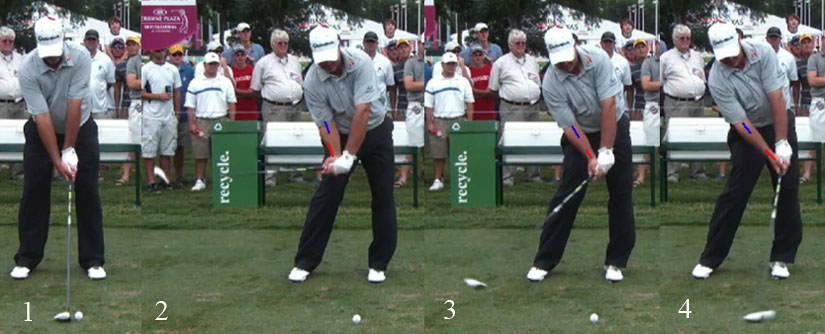
Image 1 is at P1, image 2 is at P6, image 3 is at P6.5, and image 4 is at P7.
Note that BW adopts a very strong lead hand grip
at address where the back of his lead hand faces the ball-target line, and
also a very strong trail hand grip where his trail palm is under the club
handle and facing skywards at address.
I have drawn a blue line down the middle of his
trail antecubital fossa and a short red line over his trail lower forearm's
radial bone that shows that his trail forearm is supinated at P6 and also at
P7.
Note that BW adopts a very strong lead hand grip
where the back of his lead hand is roughly parallel to the ball-target line
at address and note that his clubface is markedly closed relative to the
back of his lead hand at address. Note that the back of his lead hand is
parallel to the ball-target line at P6 and that his clubface is closed
relative to the back of his lead hand to the same degree at P6 as it was at
P1. If his clubface was square to the clubhead path at P1, then it is going
to be square to his clubhead path at P6 - note that his clubface is
significantly tilted towards the ground at P6.
Note how the back of his lead hand remains
parallel to the ball-target line between P6 => P7 and note how the clubface
remains square to his clubhead path between P6 => P7. BW does not need to
perform a PA#3 release action between P6.5 => P7 (where the clubshaft rolls
counterclockwise about its longitudinal axis) because his clubface is
already square relative to his clubhead path at P6 and at P6.5. Note that
his lead wrist simply moves from being radially deviated at P6 to becoming
less radially deviated at P7 as a result of the club release phenomenon (=
PA#2 release phenomenon). Note that his trail palm is under the club handle
at P6 and that it remains under the club handle throughout the P6 => P7 time
period, which means that his plane of trail wrist hinging is never oriented
in a targetwards direction during the P6 => P7 time period. ML's "idea" that
the trail palm must be perpendicular to the ball-target line, and facing
targetwards, between P6 => P7 in order for it to perform a clubface-closing
action makes no sense to me.
Another point. Note that BW's trail wrist is more
straightened at P7 compared to P6 (where it is very extended). Does that
mean that his straightening trail wrist is performing a clubface-closing
action? The answer is negative because BW's clubface is
not closing more
between P6 => P7 secondary to a PA#3 release action. So, why is his trail
wrist straightening (= becoming less extended) between P6 => P7? The correct
answer is that he is "running-out-of-trail arm" because of the nature of his
pivot action - where he does not open his pelvis/chest a lot between P6 =>
P7 and where his trail shoulder socket does not move very far downplane by
P7.
Consider another pro golfer - Joaquin Niemann -
who also uses a very strong lead hand grip.
Capture images of JN's late downswing and early
followthrough.
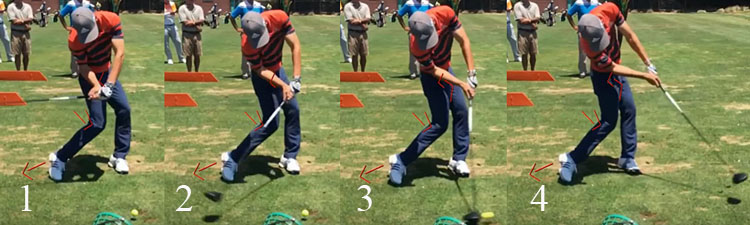
Note that JN still has a very bent trail arm and a very extended trail wrist at P7. How is that physically possible? The answer is obvious - the distance between his trail shoulder socket and his club handle is far less - compared to BW's scenario - because his trail shoulder socket has moved much further downplane secondary to the nature of his pivot action (note how open his pelvis is at impact and note how his trail socket is moving in a more ferris-wheel manner under his chin due to his chest opening action).
What about the scenario where a pro golfer
uses a weak lead hand grip, necessitating a PA#3 release action between
P6.5 => P7 - does he need to use a neutral trail hand grip (where the
trail palm faces more targetwards between P6 => P7) in order for the
trail hand to enact a clubface-closing action (in the manner suggested
by Milo)? The answer is negative!
Justin Thomas uses the combination of a weak
lead hand grip combined with a very strong trail hand grip.
Here are capture images of his late downswing
action.
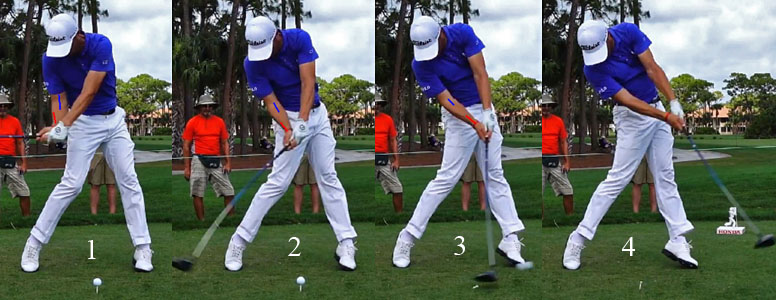
Image 1 is at P6, image 2 is at P6.5 and image 3 is at impact.
I have drawn a blue down the middle of his
trail antecubital fossa and a short red line over his trail lower
forearm's radial bone that shows that his trail forearm is supinated
at P6 and also at P7.
If a golfer adopts a weak lead hand grip,
then the clubface will be roughly parallel to the back of his lead
hand throughout the downswing if he maintains a GFLW alignment and
uses an intact LFFW/GFLW swing technique - like Justin Thomas.
Note that the back of JT's lead hand is
facing the ball-target line at P6 and P6.5 which means that his
clubface must be open relative to his clubhead path at those late
downswing time points. Note how the back of his lead hand (GFLW)
rotates a lot counterclockwise between P6.5 => P7 to become square
to the target at impact - secondary to a lead forearm supinatory
motion (which is the biomechanical basis of a PA#3 release action)
and that allows him to square his clubface relative to his clubhead
path by impact. Note that his trail hand remains under the club
handle at P6, P6.5 and P7 secondary to the fact that he uses a very
strong trail hand grip and his trail palm is never oriented
perpendicular to his hand arc path so that it is facing the target
between P6 => P7 (in the manner suggested by ML).
It is a fallacy to believe that the trail
hand is causally responsible for performing a clubface-closing
action of the clubface relative to the clubhead path (as suggested
by ML) if a pro golfer uses a TGM swinging action (lead arm swinging
action) - like Justin Thomas, Boo Weekley and Joaquin Niemann.
Jeffrey Mann.
https://newtongolfinstitute.proboards.com/thread/1117/milo-lines-video-using-baseball