Many golf instructors don't understand trail arm biomechanics
In this thread, I am going to
show how two golf instructors - Chris Ryan and Rob Cheney - have an incomplete
understanding of the trail arm biomechanics that happen in a full golf swing
action where a golfer uses a pivot-induced TGM swinging action (lead arm
swinging action).
Here is a Chris Ryan video.
In this video, CR describes how
to move the trail arm in the backswing and downswing, and he also talks about
how to load the trail wrist. CR correctly shows how a golfer should avoid
performing a lawnmower rope-pull type of backswing action, and he correctly
demonstrates that one should allow the trail elbow to fold in such a manner that
it allows the trail forearm to fan-out (rotate clockwise) as it moves to its
final P4 position. He also correctly describes how one should use a pitch elbow
motion, and not a punch elbow motion, between P4 => P6 and how the trail elbow
should be closer to the target than the trail hand at the P6 position.
However, he misrepresents the position of the trail
palm in his demonstration.
It is very important to understand what is the "true"
trail palm area.
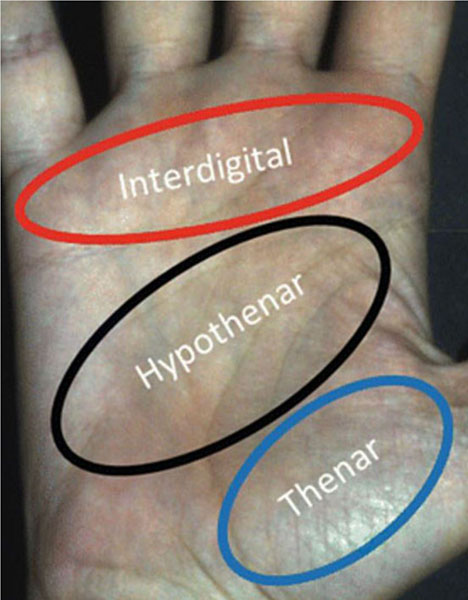
Here is a capture image of the trail palm.
The hypothenar area + the interdigital area represents the "true" trail palm area that is proximal to the 4 trail fingers. The thenar area only represents the palm area overlying the thumb metacarpal and it can be positioned ~30 - 90 degrees closed relative to the "true" trail palm area depending on trail hand grip strength.
CR adopts a neutral lead hand grip and a weak-to-neutral trail hand grip, which means that the two palms must be facing each other across the club handle (= parallel to each other).
Now, consider CR's demonstration of the backswing action using a racquet.
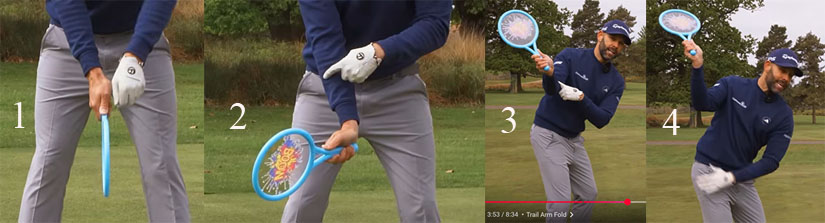
Image 1 is at P1, image 2 is at P1.5, image 3 is at P3 and image 4 is at P4.
Note that his racquet's face is parallel to his trail palm at P1 and that his trail palm is facing the target. Note that the thenar area of his trail hand is >45 degrees closed relative to his "true" palm area and that is facing more groundwards.
Note that he bends back (extends) his trail wrist during his takeaway action between P1 => P2.
Note that his racquet's face is correctly positioned at the P4 position, and it is parallel to his swingplane -presuming that his lead arm/hand and clubshaft were on a swingplane at the P4 position where the base of the swingplane is the ball-target line.
However, look at his racquet's face at the P3 position - note that it is facing away from the target. That never happens in a pro golfer's backswing action if the lead wrist remains neutral, and not artificially bowed, and if the back of the lead wrist/hand is parallel to the swingplane. If the back of the lead wrist/hand (and therefore lead palm) is parallel to the swingplane between P2 => P4, then the trail palm must also be parallel to the swingplane (presuming equally weak-to-neutral grip strength).
Consider CR at his P3 position - capture image from the same CR-video.
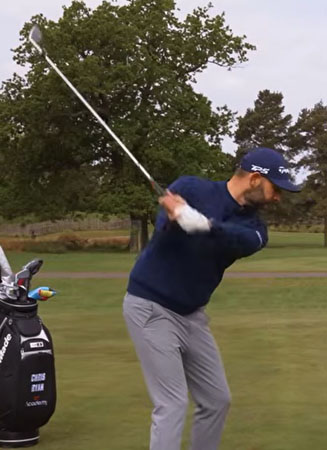
Note that CR's clubshaft is on a swingplane at his P3 position.
Note that the back of his lead wrist/hand is parallel to his swingplane, and that means that his lead palm is parallel to the swingplane. His trail palm is parallel to his lead palm, which we know is parallel to his swingplane. Also, note that his clubface is parallel to his swingplane, which means that his i) lead palm, ii) trail palm and iii) clubface are all parallel to his swingplane.
That means that CR is doing "something" different in his "real life" golf swing action (where the trail palm is parallel to the swingplane at P3) - compared to his racquet demonstration (where his trail palm is facing partially away from the target and towards the camera). What is he doing differently in his "real life" golf swing action? He is allowing his trail forearm to rotate more clockwise during his trail arm folding action and that causes the trail palm to rotate more clockwise so that it becomes parallel to his swingplane by P3.
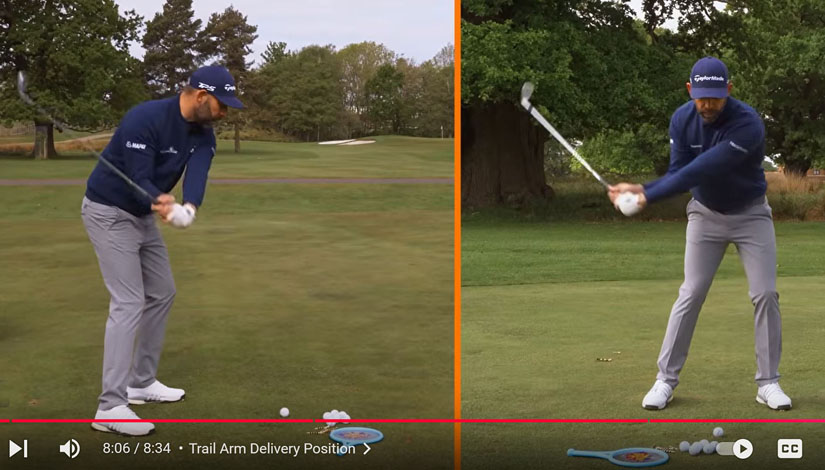
Now, consider what CR does during his downswing action when using a racquet as his demonstration tool.
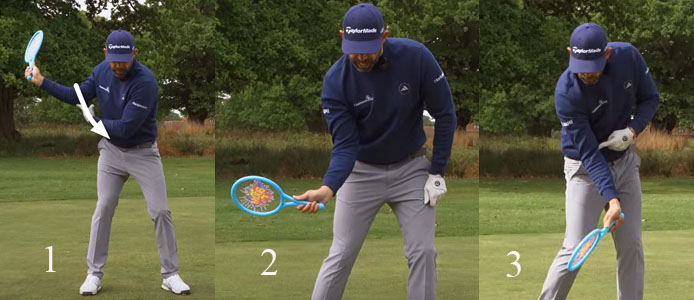
Image 1 is at ~P5, image 2 is at P6, and image 3 is at P6.5.
Note that his racquet's face is not parallel to his swingplane at P5, and it is closed relative to his clubhead path so that it faces partially away from the target.
Note that he has
his lead elbow closer to the target at P6 than his lead hand as a
result of using a pitch elbow motion of his trail arm. However, note
that his racquet's face is tilted groundwards (= more closed
relative to his clubhead path).
Note that his trail palm and his racquet's face is facing groundwards at P6.5.
Why is his racquet's face closed relative to his clubhead path at P6? The correct answer is that his trail forearm is not sufficiently supinated as it would be in a "real life" golf swing action if the lead palm and clubface were parallel to the ball-target line at P6 (and not tilted groundwards at P6).
Consider CR's P5.5 position in his "real life" golf swing action - capture image from the same CR-video
Note that CR's clubshaft is parallel to his swingplane, which is shallower than his swingplane at P4 and at P5.
To get his clubshaft to shallow-out between P5 => P5.5, he is pronating his lead forearm slightly more during the P5 => P5.5 clubshaft-shallowing time period so that his lead palm can be parallel to his slightly shallower swingplane. His trail palm must be parallel to his lead palm and swingplane - so if his lead palm, which is parallel to his swingplane, is facing groundwards, then his trail palm must be facing partially skywards, and not groundwards.
I have
never seen a pro golfer have his trail palm facing groundwards
between P4 => P5.5, and it is always facing skywards to a
variable degree (especially if the clubshaft is positioned on a
shallower swingplane) at P5.5.
Let's consider
the downswing action of a pro golfer - Scottie Scheffler - who
uses a weak lead hand grip and a weak trail hand grip.
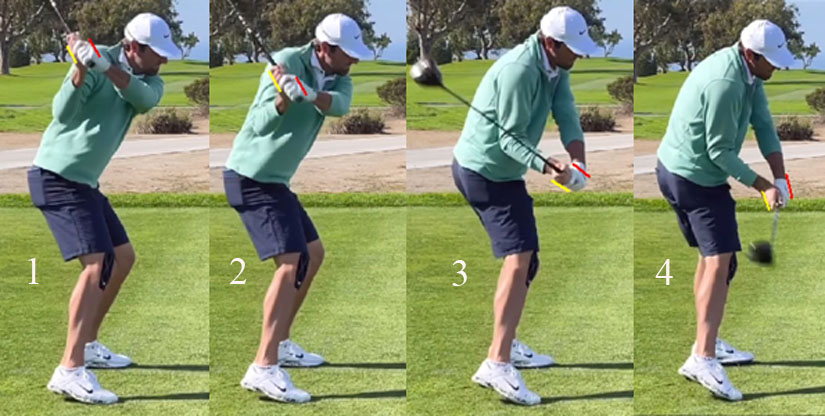
Image 1 is at P4.5, image 2 is at P5, image 3 is at P5.5 and image 4 is at P6.
I have drawn a short red line parallel to his lead palm and a short yellow line parallel to his trail palm, and they must be parallel to each other between P4 => P5.5 and also parallel to his swingplane (which is shallowing between P4 => P5.5). If his lead palm faces partially groundwards between P4.5 => P5.5, then his trail palm must be facing partially skywards. Note that he needs to use a large amount of trail forearm supination to get his trail palm to be parallel to his swingplane at P5.5.
Note that he is starting to release his club between P5.5 => P6 and that his clubshaft is remaining parallel to his functional swingplane, and it is not "tumbling" in an over-the-plane manner. That means that he must be continuing to supinate his trail forearm to the necessary degree that prevents the clubshaft from "tumbling" over-the-plane.
Consider his
later downswing action from a face-on viewing perspective.

Image 1 is at P6, image 2 is at P6.5 and image 3 is at P7.
I have drawn a blue line down the middle of his trail antecubital fossa and trail upper forearm and a red line along his trail lower forearm's radial bone.
Note that his trail forearm is very supinated at P6. Note that his trail palm is facing skywards to a finite degree and also facing towards the ball-target line to a finite degree at P6.
Note that his lead palm is facing slightly groundwards at P6.5, which means that his trail palm is still facing slightly skywards - one can clearly see that his trail palm is still partially under his club handle at P6.5.
Note that by P7, that his lead palm and trail palm are mainly facing the target, but that his lead forearm is still minimally pronated, which causes his lead palm to be very slightly facing groundwards at P7. His trail palm is parallel to his lead palm, which means that it although it is mainly facing targetwards that it is very slightly facing skywards at P7.
Note how SS squares his clubface relative to his clubhead path between P6.5 => P7 by performing a lead forearm supinatory action (called a PA#3 release action in TGM terminology) that rotates his lead hand/lead palm counterclockwise by a finite amount. His trail palm must rotate by the same amount. How does that happen from a biomechanical perspective considering the fact that his trail forearm is still supinated at impact and there is very little rotation of his trail forearm in a pronatory direction happening between P6.5 => P7. The correct answer is that he is performing a trail wrist circumductory roll motion while he partially straightens his trail wrist between P6.5 => P7.
Now, consider the opinions expressed by Rob Cheney in the following video.
Note how RC wants a golfer to position his trail arm and trail forearm at address and at P6.
Note that RC wants the trail arm to be in what he calls position 3 where the trail antecubital fossa faces the ball-target line. However, he wants to the trail forearm to be in position 1 where the trail forearm is less supinated at the P6 position. RC wrongheadedly believes that if the trail forearm is more supinated at the P6 position - being in position 3 - that a golfer would not be able to square the clubface by impact. I think that RC is wrong for two reasons - i) the trail forearm is not used to square the clubface relative to the clubhead path between P6 => P7 and ii) RC does not take into account the fact that the trail palm can remain parallel to the lead palm during a PA#3 release action (which happens between P6.5 => P7) secondary to a trail wrist circumductory roll motion that happens when a golfer straightens the trail wrist.
Consider a golfer - Justin Thomas - whose trail wrist is in position 3 at P6, where it is more supinated due to the fact that he adopts a strong trail hand grip.
Here are capture images from that video.
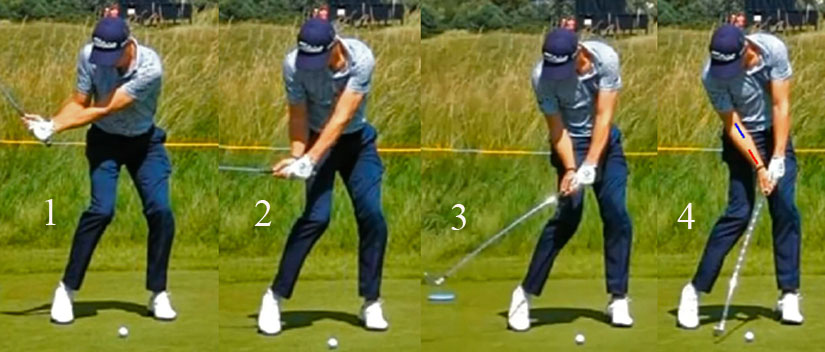
Image 1 is at P5.5, image 2 is at P6, image 3 is at P6.5 and image 4 is at P7.
At P5.5, JT's lead palm must be parallel to his swingplane. His trail palm must also be parallel to his swingplane, but to a different degree when compared to Scottie Scheffler because JT uses a strong trail hand grip that rotates his trail palm more under the club handle at address, while SS uses a weak trail hand grip that rotates his trail palm more behind his club handle at address.
At P6 and at P7, note that JT's trail forearm is going to be more supinated - compared to SS at his P6 position and P7 position. Note that JT's trail forearm is in position 3 (using RC's terminology) at P6.
However, note that JT can still easily square his clubface relative to his clubhead path between P6.5 => P7 by performing a PA#3 release action, which is secondary to a lead forearm supinatory motion. During that P6.5 => P7 time period, he can also rotate his trail palm counterclockwise by the same amount as his lead palm rotates counterclockwise by performing a trail wrist circumductory roll motion as he straightens his trail wrist. However, note that his trail palm is much more under the club handle at P7 - compared to SS at P7 - and that is due to the fact that his trail forearm is comparatively more supinated at his P6, P6.5 and P7 positions and that his trail wrist is also more extended (see their comparative P6.5 and P7 images).
What RC gets wrong is his
didactic opinion
that the trail forearm cannot be well supinated ( =
position 3) at the P6 position - as seen in Justin
Thomas' full golf swing action - because i) he does
not realize that the clubface-closing action seen in
a pro golfer (who uses a weak lead hand grip) is due
to a lead forearm supinatory action and not due to
trail forearm rotation in a pronatory direction, and
ii) he does not realize that the trail palm can
still rotate counterclockwise by the same amount as
the lead palm during a PA#3 release action due to
the circumductory roll motion happening during a
trail wrist straightening action.
Jeffrey Mann.
https://newtongolfinstitute.proboards.com/thread/1216/golf-instuctors-understand-trail-biomechanics